On November 20, 2025, Miss Yu Miao from the International Students College organized a lecture titled 'Chinese Character and Culture'. The lecture explained the phonetic-semantic nature of Chinese characters, common radicals, structural classifications, and the evolution of scripts, and also recommended several apps for learning Chinese characters.
The lecture began with the premise that “Chinese characters are typical phonetic-semantic symbols,” illustrating the three-fold relationship of form, sound, and meaning. Taking the character ‘想’ as an example, the top part ‘相’ indicates the pronunciation while and bottom part ‘心’ conveys the meaning.
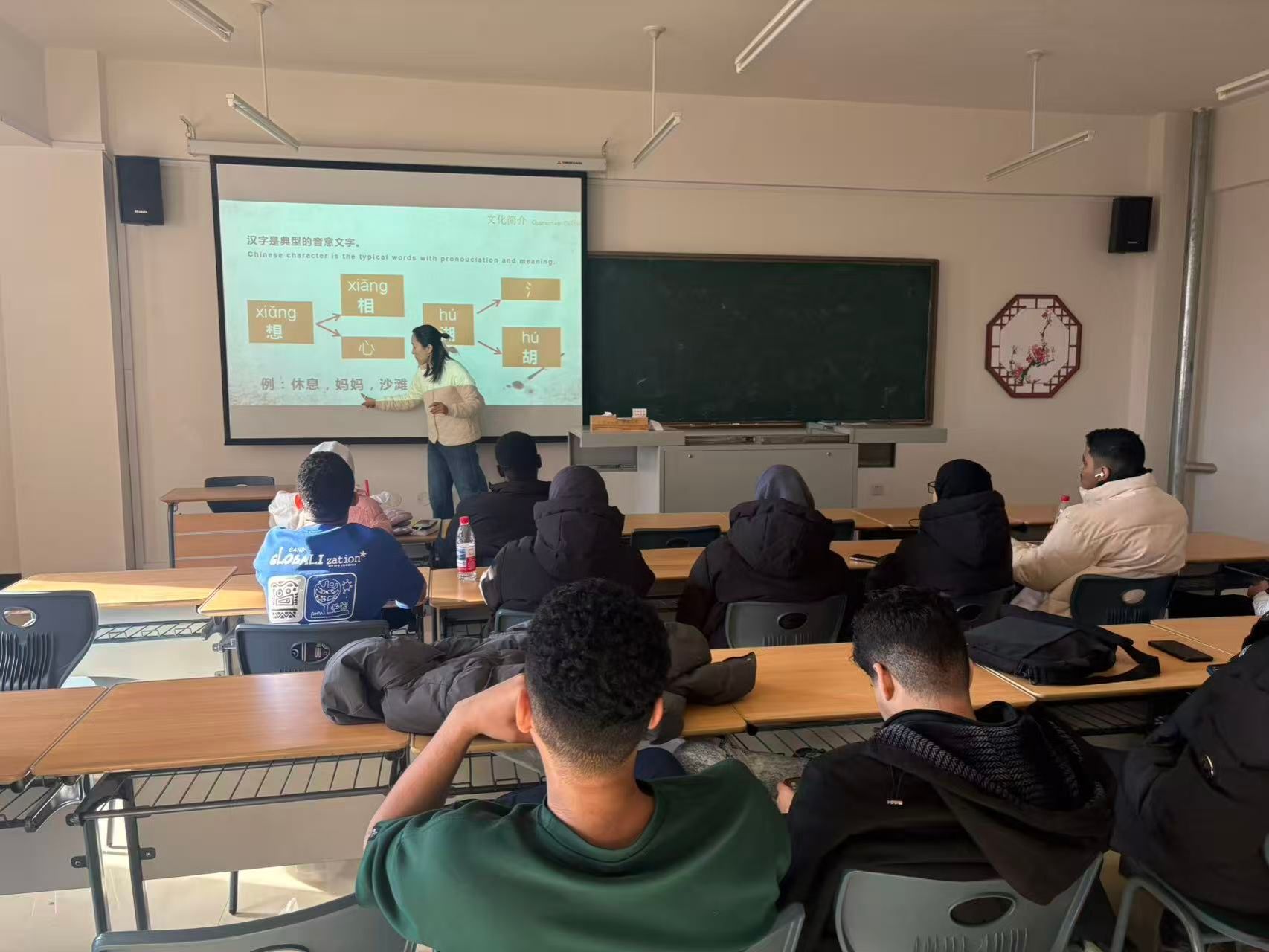
Next, the lecture focused on common radicals, such as the three-dot water radical 氵(water), the speech radical 讠 (language), the hand radical 扌(actions), the grass radical 艹 (plants), and the clothing radical 衤 (clothing). Each category was paired with typical example characters to help learners quickly grasp how radicals contribute to word formation.
Miss Yu then introduced the common types of the structure of Chinese characters— left-right, top-bottom, semi-enclosed, and fully enclosed—providing concrete examples such as 你, 家, 送, 家, along with writing demonstrations.
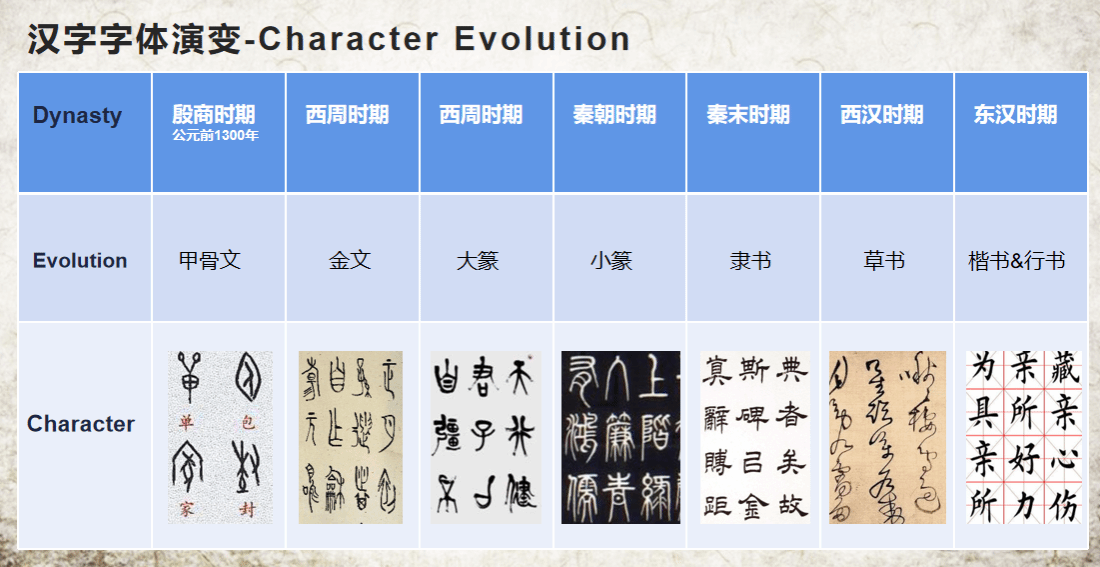
The lecture also showcased the evolution of Chinese scripts. Miss Yu listed, in chronological order, the major script styles—oracle script(甲骨文), bronze script(金文), large seal script(大篆), small seal script(小篆), clerical script(隶书), cursive script(行书), and regular script(楷书)—accompanied by representative characters. This visual timeline clearly illustrated the transition from pictographic to abstract forms and from complex to simplified styles, helping learners understand the historical development of Chinese writing.
Finally, Miss Yu recommended two learning apps: “Hong En Literacy (洪恩识字) – Children’s Literacy Starter,” aimed at children aged 3-8 and featuring cartoon graphics to boost engagement; and “Skritter: Write Chinese,” designed for adults, offering stroke-order practice and expert video tutorials that combine traditional writing techniques with modern technology.
Through a richly illustrated approach, the lecture integrated the structure and evolution of Chinese characters with learning tools, preserving the depth and aesthetic of Chinese script while presenting effective pathways for improving character recognition and writing skills.
文/王珊珊
图/王春芳
宣传员/林萍萍
审核/邵秀娟